Method of Gaining Credit in Politics…in the Battleground
Credit Earned with Valor and Patience
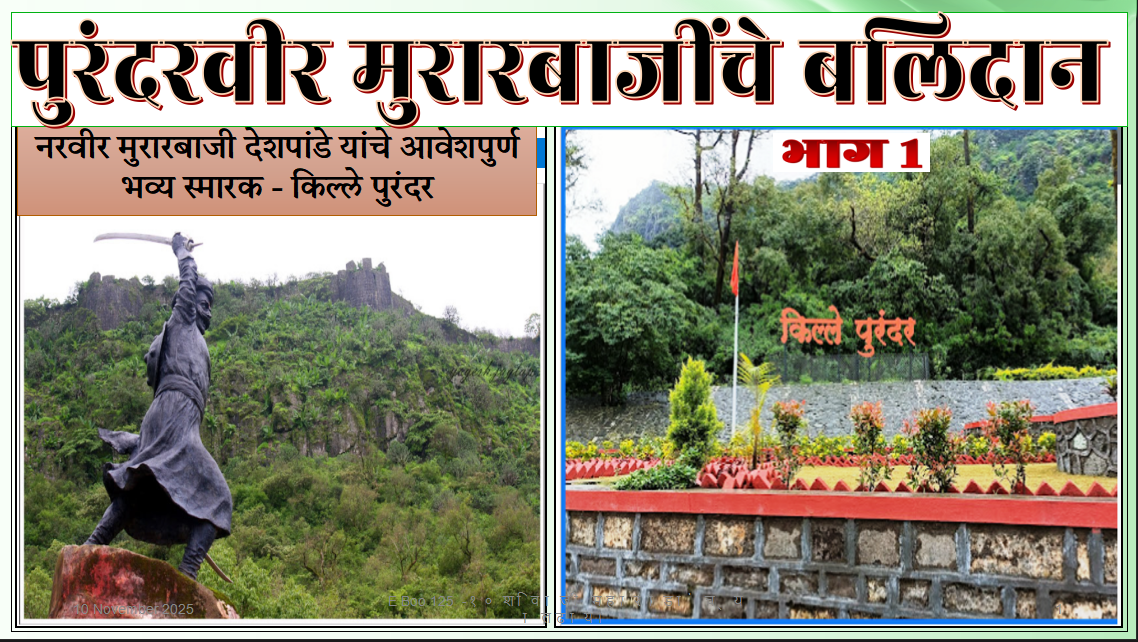
As soon as news of the treaty reached him, Diler Khan became enraged.
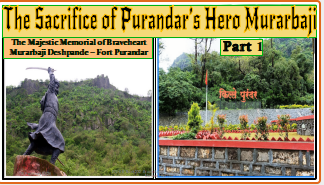
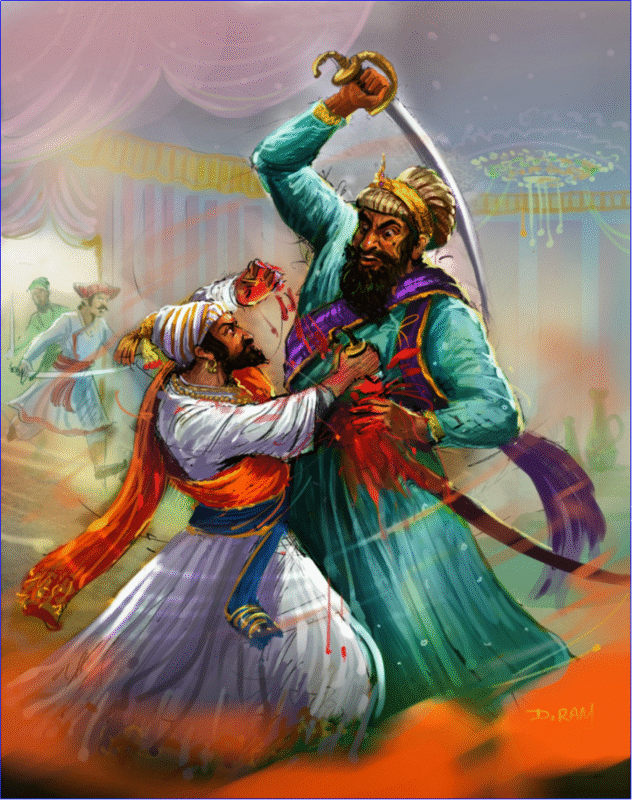
He said, “You are a great warrior. I am astonished to see your amazing valor. Accept the invitation now and come under my command. I will appoint you to a high position…” Murarbaji rejected Diler Khan’s temptation.
The supplies from the second fort were cut off. The last condition of the Murarbajis. The sacrifice of 700 hundred warriors. Now it began to look like the other forts would fall into their hands.
In the Court Room Discussion
Credit Earned by Showing Compromise and Fear Proposals for discussion through Maharaj’s lawyer.
Correspondence began to explore the possibility of a treaty. Mirza Raje’s view was, “How much longer will we keep striking Purandar Fort? It is better to make a harmonious treaty instead.”
Did Shivaji Maharaj see the Taj Mahal?
Today, for a common person, going to see Rashtrapati Bhavan is as difficult as it was in those days for people to try to see the king, his palace, and the inner buildings; even with effort it was virtually impossible.
Shiva (his son) had been summoned there for the formal proceedings of granting him a subordinate rulership, and that too at the insistence of Mirza Raja Jai Singh. So he probably never even thought of visiting the Taj Mahal.
However, during the meeting with Ram Singh, it would have been possible for him to gather as much information as he could about the important nobles’ mansions in and around Agra, the customs‑tax posts, the heads of the inns on the return route, the money‑lending bankers’ establishments, the sweet‑shops of the halwais, and about the local pandits and priests, and then set his own men in motion on that basis.
In the same conversation, while explaining how my forefathers had helped to seat Shah Jahan on the throne, it is quite possible that the topic of the Taj Mahal also came up.
Aurangzeb’s very reason for leaving Delhi, the capital, and coming to live in the Red Fort of Agra was Shah Jahan’s death. After rotting away in long solitary confinement for eight years, he died in January 1666. The construction work of his both marble graves must have continued till about May. That means in one sense the matter of the Taj Mahal was still fresh.
Therefore, discussion about the Taj Mahal must certainly have taken place. (These are my own thoughts. In the way the late Puna Oak used to speak, it would appear that Shiva was probably kept under house arrest somewhere in the area around the Taj Mahal.)












Reviews
Clear filtersThere are no reviews yet.