-50%

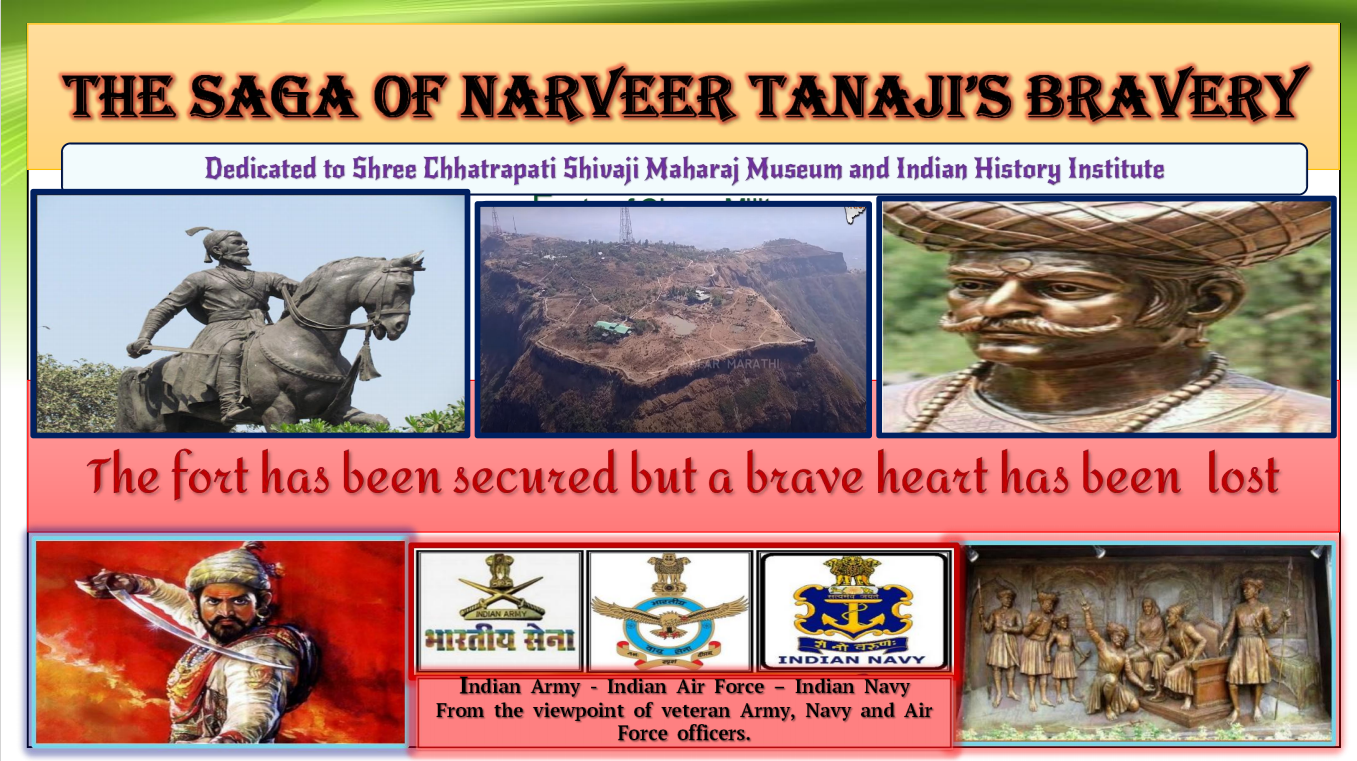


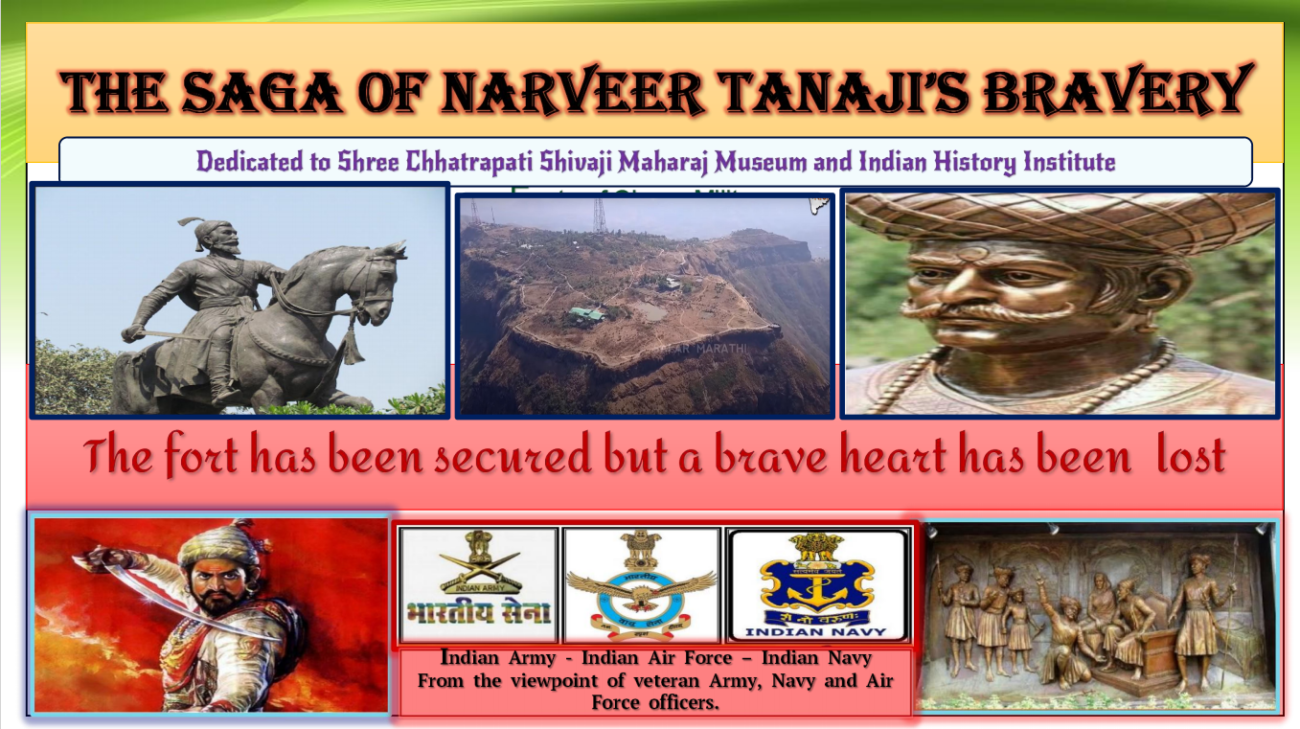
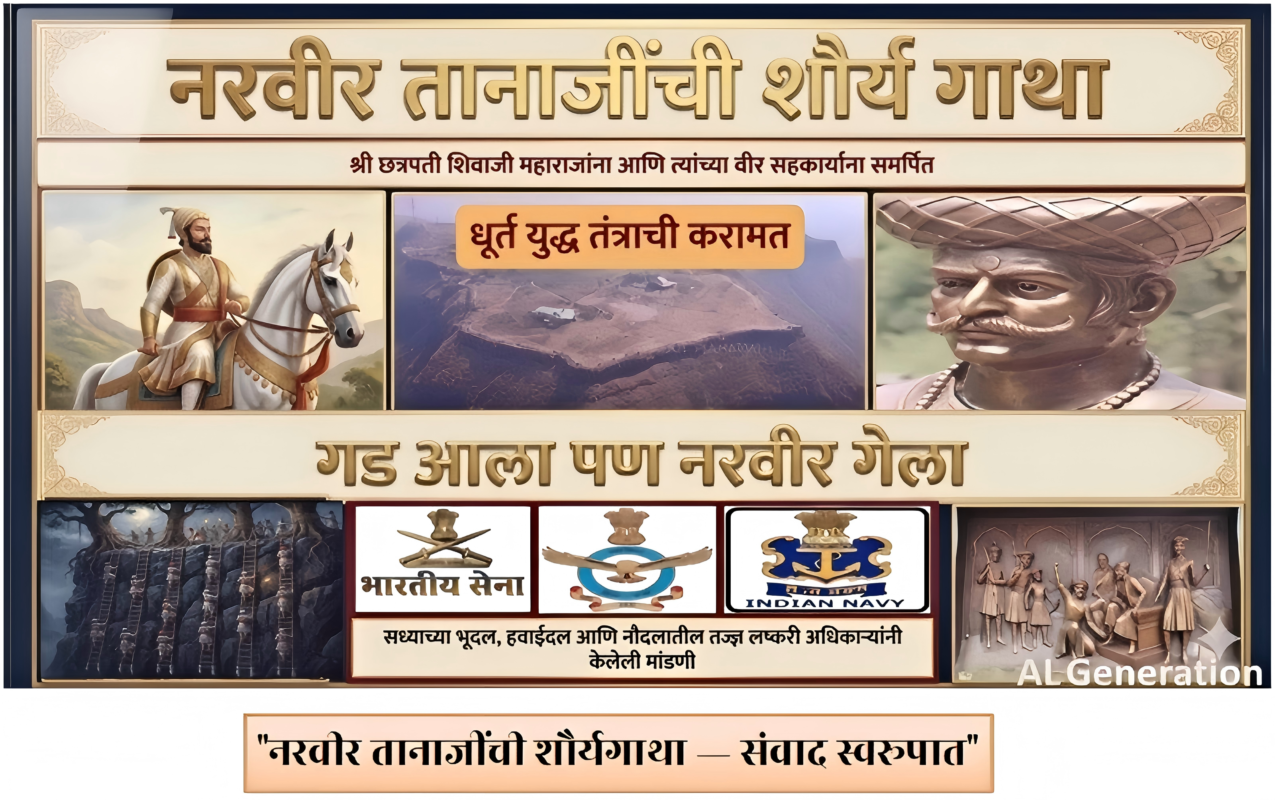
Title: E-Book 99: The Saga Of Narveer Tanaji Malusare’s Bravery
Subtitle: Feats of Clever Military Strategy & The Night Assault on Sinhgad (1670)
Author: Wing Commander Shashikant Oak
Perspective: Joint-Services Staff Analysis (Insights from Veteran Army, Navy, and Air Force Officers)
Dedicated To: Shree Chhatrapati Shivaji Maharaj Museum and Indian History Institute
Format: Fixed-Layout Presentation Slide Monograph (Digital PDF)
Price: ₹200
This monograph presents a comprehensive operational and tactical analysis of the historical night assault on Sinhgad Fort (Kondhana) on the night of 4 February 1670 (Magh Vadya Navami, Saka 1591). Rather than evaluating the campaign through folklore, this study analyzes the battle through modern military doctrine—specifically Manoeuvre Warfare, operational security, surprise, and terrain leverage.
Faced with a heavily fortified garrison of 1,200 to 1,500 soldiers commanded by Udaybhan Rathod, Subedar Tanaji Malusare executed a high-risk vertical infiltration with 1,000 Mavlas. The strike element was structured into an assault force under Tanaji and a reserve wave under his brother, Suryaji Malusare.
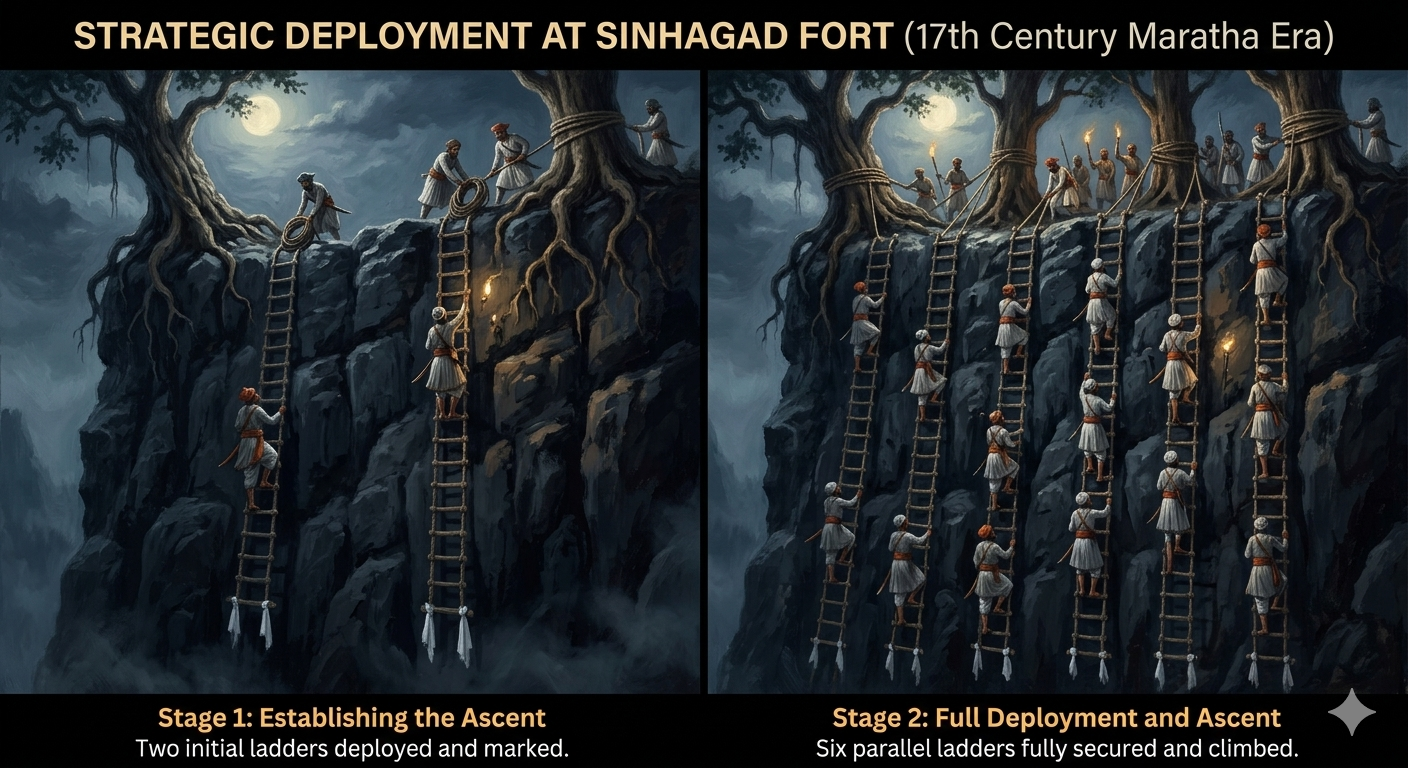
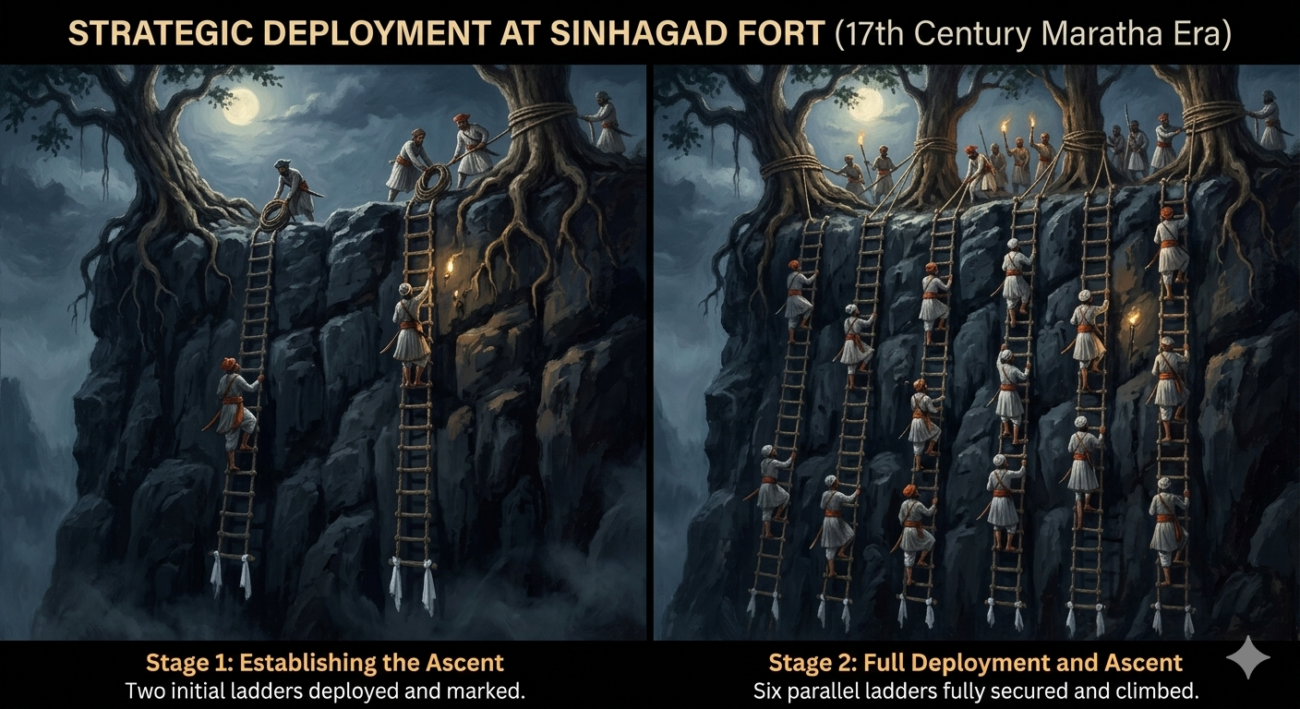
Terrain Evaluation & Infiltration: Selection of the sheer Donagiri Cliff—a route deemed impassable and left unmonitored by enemy guards—allowing stealth scaling using specialized rope ladders.
Time-and-Motion Scale: Conducting the ascent between 0200h and 0400h, targeting the window of maximum enemy fatigue, with timekeeping gauged via lunar transit overhead.
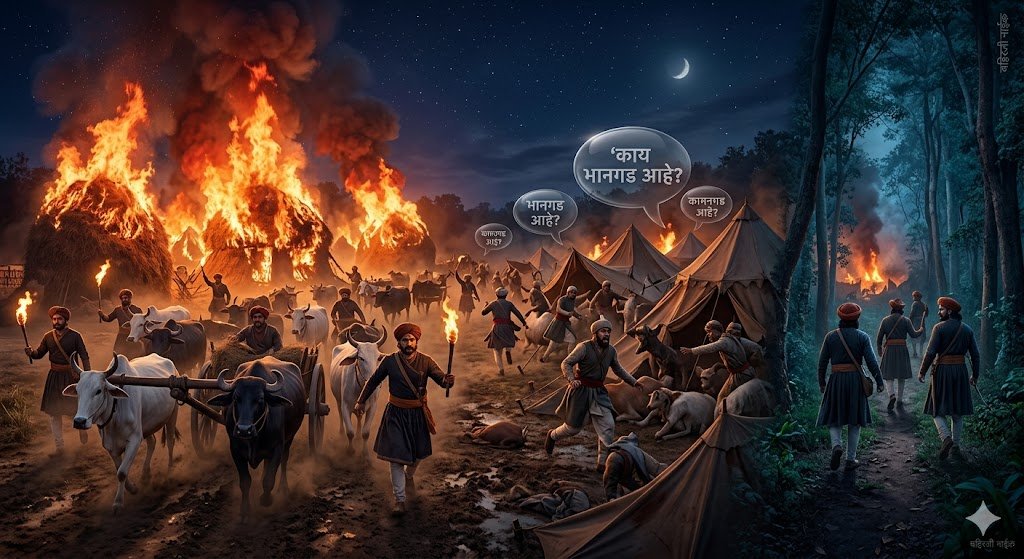
Asymmetric Diversion: Unleashing untethered livestock into enemy encampments and igniting fodder stores using oil-soaked cotton to trigger widespread internal panic.
Breaching Operations: Deployment of a dedicated stonebreaker section to forcibly demolish and open the double-locked Kalyan Gate from the inside under heavy defensive friction.
Command Resilience: The tactical duel between Tanaji and Udaybhan, the arrival of Suryaji’s reserve wave, and the final capitulation of the garrison.
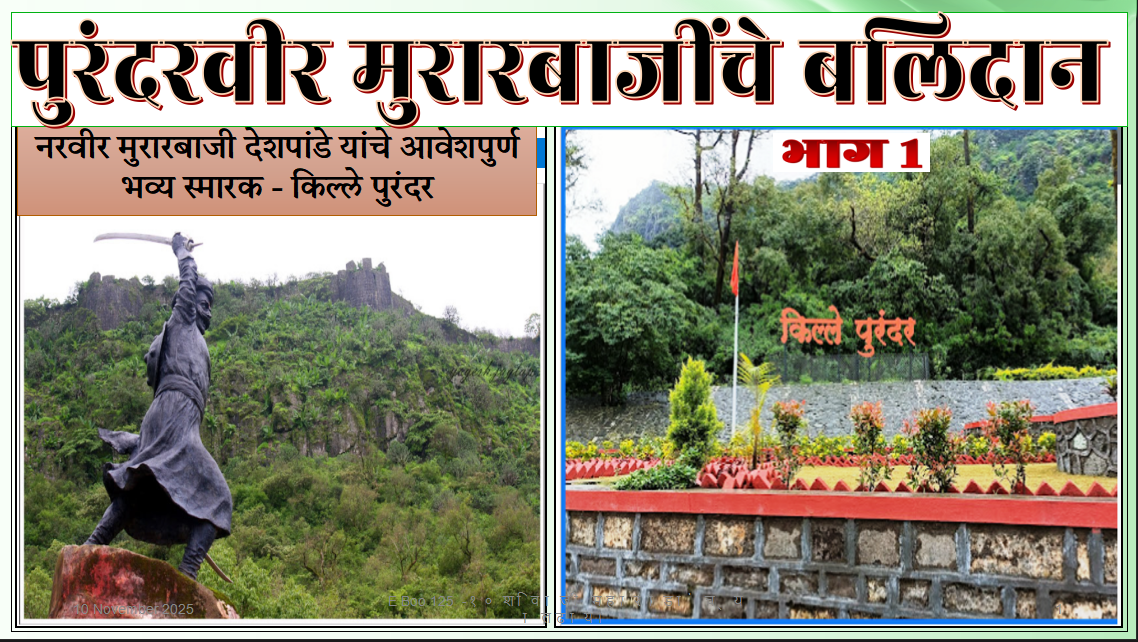
Strategic Prelude: The Treaty of Purandar (1665) and the Imperative for Re-capturing Kondhana
Command Selection: Tactical Rationale for Appointing Tanaji Malusare
Intelligence & Cartography: Bahirji’s Espionage Network and Perimeter Surveys
Logistical Readiness: Procurement of Ropes, Weapons, Diversionary Materials, and Field Supplies
Terrain Appreciation: Rationale Behind Choosing the Donagiri Cliff Approach
Time & Motion Study: Moon Phase Calculation and the 0200h Infiltration Window
Execution Phase I: Multi-Company Scaling, Sentry Neutralization, and Concealment
Execution Phase II: Stampedes, Fire Diversions, and Bottlenecking Retreating Forces
Execution Phase III: Demolition of Kalyan Gate and Arrival of Reinforcements
The Citadel Duel: Close-Quarters Combat, Command Sacrifice, and Final Victory
Retrospective Analysis: Operational Insights from Senior Indian Defense Commanders
Maj Gen Shishir Mahajan: Contextualizing the Treaty of Purandar and the strategic imperative of 1670.
Lt Gen Dattatreya Shekatkar: Infantry command dynamics and Tanaji’s localized terrain knowledge.
Lt Gen Rajendra Nimbhorkar: Intelligence collation by Bahirji’s reconnaissance network.
Brig Hemant Mahajan & Late Lt Gen Venky Patil: Physical perimeter surveys, jungle clearing, and counter-surveillance tactics.
Cmde Shrikant Deshmukh: Equipment parade states and logistical staging.
Lt Gen Satish Satpute & Lt Gen Sanjay Kulkarni: Terrain bottlenecking and time-and-motion climbing rates.
Air Marshal Bhushan Gokhale: Lunar timekeeping during zero-visibility operations.
Maj Gen Amardeep Bhardwaj (DSSC): Principles of Manoeuvre Warfare, shock, and deception.




No account yet?
Create an Account








Reviews
Clear filtersThere are no reviews yet.